Software teams ship code faster than ever before. But speed comes with a catch—more releases mean more chances for bugs, security gaps, and performance issues to slip through the cracks. That’s where artificial intelligence steps in.
AI is reshaping how teams approach software analysis, turning slow, manual processes into fast, intelligent workflows. From spotting defects before they reach production to predicting which parts of a codebase are most likely to break, AI tools are giving developers and QA engineers a serious edge.
This post breaks down exactly how AI is changing software analysis and quality assurance. You’ll learn what’s actually happening under the hood, where AI delivers the most value, and how these changes affect software ratings, comparisons, and evaluations. Whether you build software or buy it, understanding these shifts will help you make smarter decisions.
What Is Software Analysis, and Why Does It Matter?
Software analysis is the process of examining code, applications, and systems to assess their quality, performance, security, and reliability. It covers everything from static code reviews to dynamic testing during runtime.
Traditionally, this work fell to human analysts and QA engineers who manually combed through code, ran test cases, and logged defects. The process was thorough but slow. A single review cycle could take days, and even the best testers missed edge cases that only surfaced after release.
Good software analysis matters for a simple reason: it protects users and businesses. Poor-quality software leads to crashes, security breaches, and frustrated customers. According to industry research, fixing a bug after release can cost up to 100 times more than catching it during the design phase. That financial gap is exactly why AI-driven analysis has become so attractive.
How AI Changes the Software Analysis Process
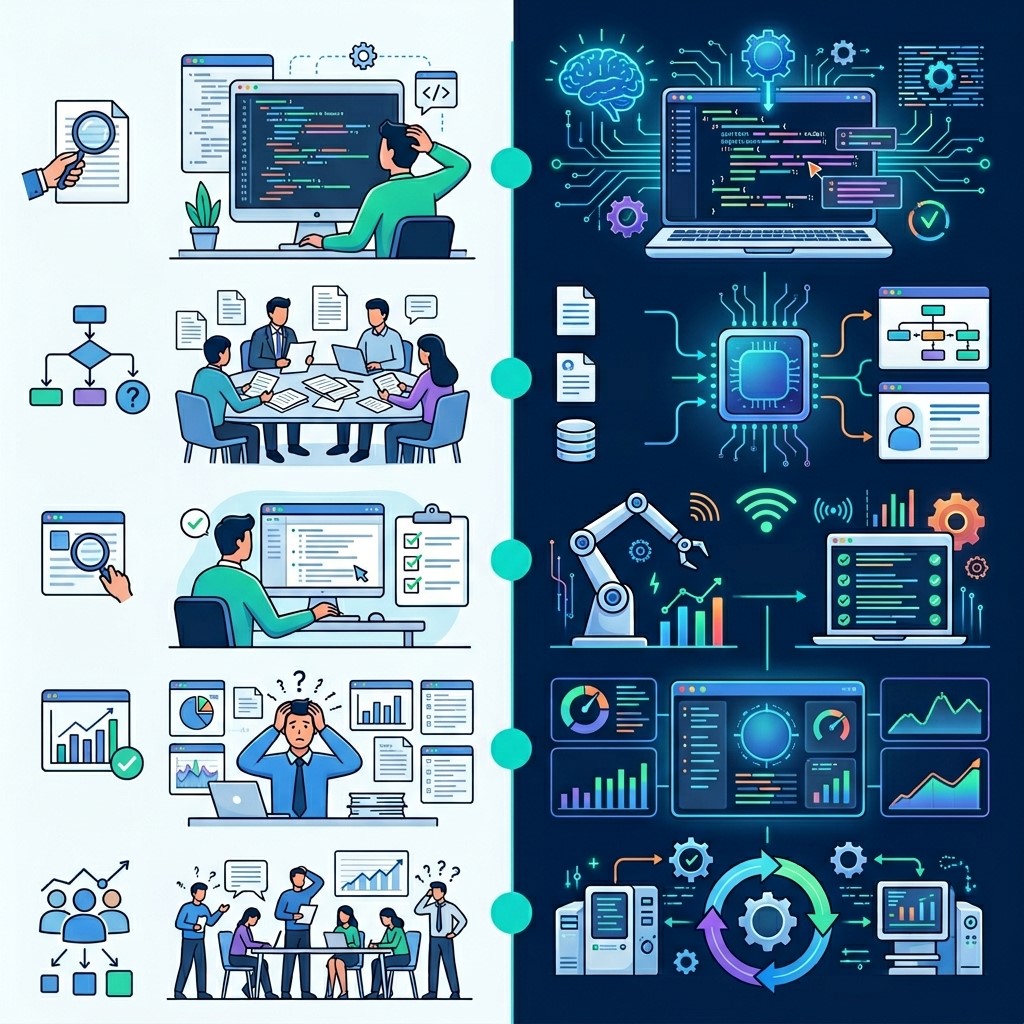 AI doesn’t just speed up old methods—it introduces entirely new ways to understand software. Machine learning models can study millions of lines of code, learn patterns from past projects, and flag issues that human reviewers would likely overlook.
Automated Code Review and Static Analysis
Static analysis examines code without running it, looking for bugs, security flaws, and style violations. AI-powered tools take this further by learning from massive code repositories.
Instead of relying only on fixed rules, these tools recognize patterns that signal trouble. For example, an AI model might notice that a certain coding structure has historically led to memory leaks, then warn the developer before the code ever runs. Tools like GitHub Copilot and DeepCode analyze code in real time, offering suggestions as developers type.
The result? Cleaner code, fewer review cycles, and faster feedback loops.
Predictive Defect Detection
One of AI’s most powerful contributions is its ability to predict where defects are most likely to appear. By analyzing historical data—past bugs, code complexity, and how often files change—machine learning models can rank parts of a codebase by risk.
This means QA teams stop testing everything equally. Instead, they focus their energy on the high-risk areas most likely to fail. The approach saves time and catches more critical bugs before they reach users.
Intelligent Test Generation
Writing test cases by hand is tedious and incomplete. AI can generate test cases automatically by studying how an application behaves and identifying scenarios humans might miss.
These tools explore countless input combinations, edge cases, and user paths far faster than any manual tester. Some AI systems even adapt their tests as the software evolves, keeping coverage high without constant rewrites.
How AI Is Reshaping Quality Assurance
Quality assurance has always been about catching problems before customers do. AI supercharges that mission by making testing faster, smarter, and more reliable.
Self-Healing Test Automation
Automated tests break easily. A small change to a button or page layout can cause an entire test suite to fail, even when the application works fine. This problem—called test flakiness—wastes enormous amounts of engineering time.
AI-driven self-healing tests solve this by automatically adjusting to changes in the user interface. When an element moves or gets renamed, the AI recognizes it and updates the test on its own. Teams spend less time fixing broken tests and more time improving the product.
Visual and User Experience Testing
Functional tests confirm that code works, but they often miss visual problems—a misaligned image, an overlapping button, or text that spills off the screen. AI-powered visual testing tools capture screenshots and compare them against expected results, flagging visual bugs that traditional tests ignore.
This matters because users judge software on how it looks and feels, not just whether it technically functions. Catching visual defects early protects the user experience.
Continuous Testing in CI/CD Pipelines
Modern teams release updates constantly through continuous integration and continuous delivery (CI/CD) pipelines. AI fits naturally into this workflow by running intelligent tests at every stage.
Rather than testing everything on every commit, AI prioritizes the tests most relevant to recent changes. This keeps pipelines fast while maintaining strong coverage—a balance that’s hard to strike manually.
The Impact on Software Ratings and Comparisons
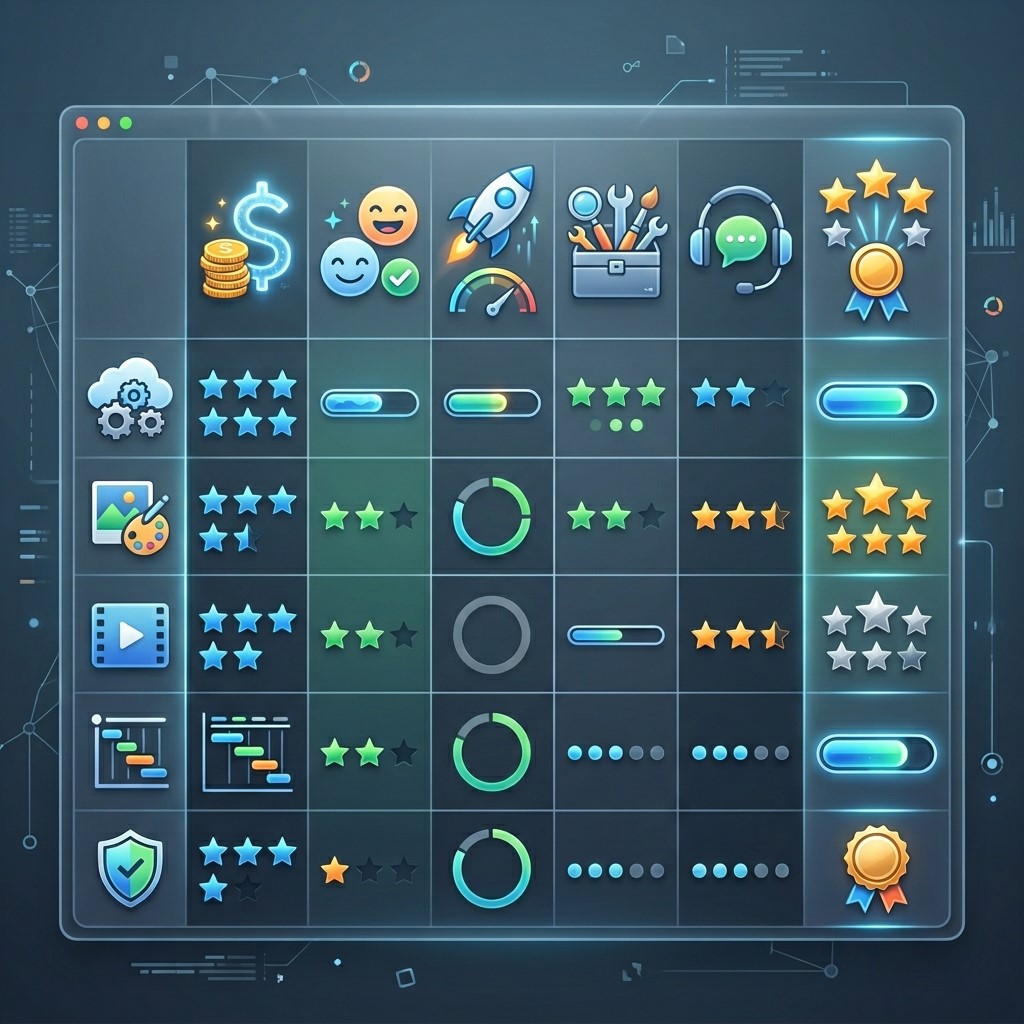 As AI reshapes how software gets tested, it also changes how we evaluate and compare products. Software ratings increasingly reflect not just features, but the quality and reliability that AI-driven analysis helps ensure.
More Objective Software Evaluation
AI introduces measurable, data-backed criteria into software evaluation. Instead of relying solely on user opinions, evaluators can analyze code quality scores, defect rates, security vulnerability counts, and performance benchmarks.
This shift makes software comparison more objective. A buyer comparing two project management tools, for instance, can look beyond marketing claims and examine hard metrics about stability and security.
Real-Time Quality Monitoring
AI doesn’t stop working after release. Modern tools monitor live applications, tracking crashes, slowdowns, and errors as real users interact with the software. This continuous feedback feeds back into software ratings, giving a more accurate picture of long-term quality.
A product that scores well at launch but degrades over time will now show that decline in its data. Buyers benefit from a truer, ongoing assessment rather than a one-time snapshot.
Smarter Software Comparison for Buyers
When choosing between competing products, decision-makers want clear, reliable information. AI-powered analysis platforms aggregate quality data across many applications, making side-by-side software comparison far more meaningful.
Choose tools with strong AI-driven quality metrics if reliability and security top your priority list. If you’re a small team with limited testing resources, lean toward software that demonstrates consistent, monitored quality—because you’ll have fewer surprises down the road.
Benefits and Challenges of AI in Software Analysis
AI brings clear advantages to software analysis and quality assurance, but it’s not a magic fix. Understanding both sides helps teams adopt it wisely.
Key benefits include:
- Speed: AI analyzes code and runs tests far faster than manual methods, shortening release cycles.
- Coverage: Machine learning explores edge cases and input combinations that humans often miss.
- Cost savings: Catching defects early reduces the expensive work of fixing bugs after release.
- Consistency: AI applies the same standards every time, removing human fatigue and oversight.
- Prioritization: Predictive models direct testing effort toward the riskiest, most important areas.
Challenges to keep in mind:
- False positives: AI sometimes flags issues that aren’t real problems, requiring human judgment to filter out noise.
- Training data quality: Models are only as good as the data they learn from. Biased or incomplete data leads to unreliable results.
- Over-reliance: AI should support human experts, not replace them entirely. Critical thinking still matters.
- Integration effort: Adopting AI tools takes time, training, and adjustment to existing workflows.
The teams that win are those that pair AI’s speed and scale with human expertise and oversight. AI handles the heavy lifting; people handle the nuanced decisions.
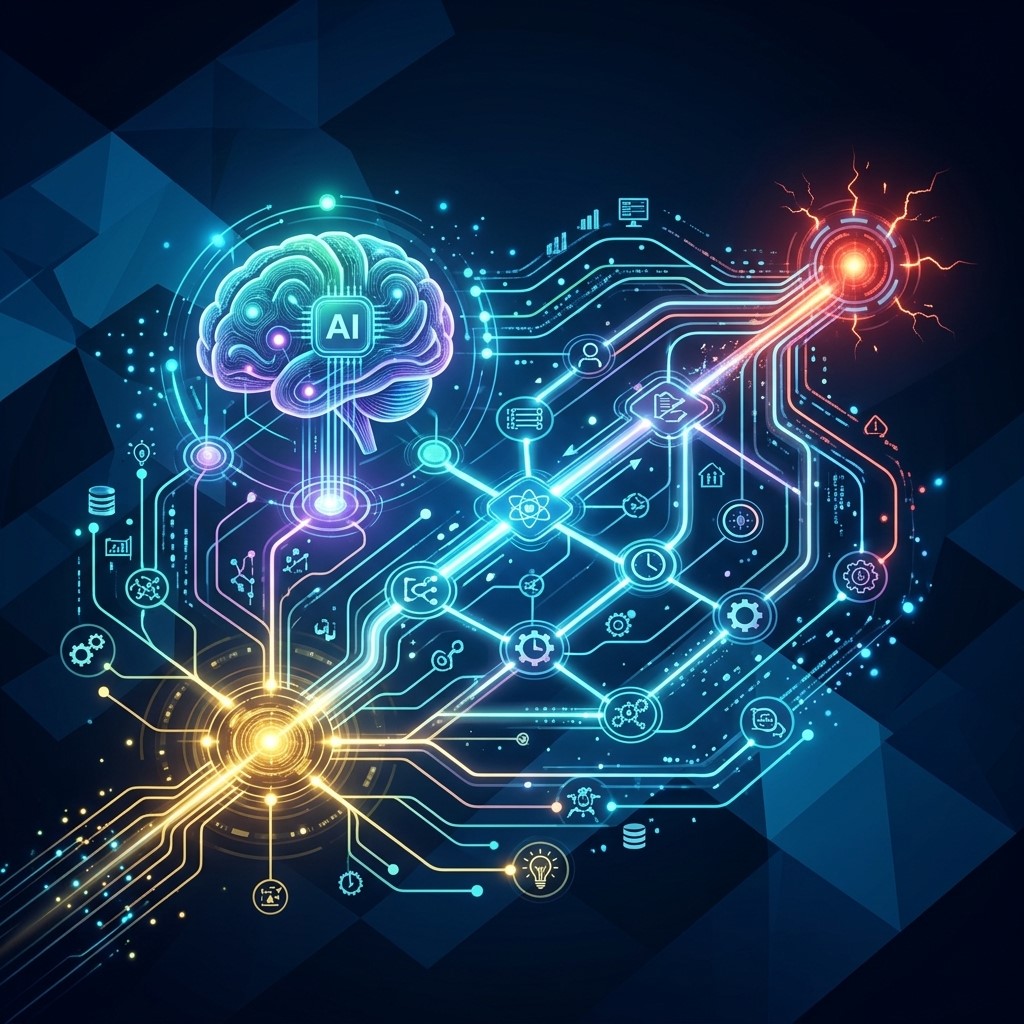 Finding the source of a software issue can take hours or even days when done manually. AI-powered root cause analysis speeds up this process by tracing errors across logs, code changes, and system behaviors. Instead of simply reporting that something failed, AI helps teams understand why it failed. Faster diagnosis means quicker fixes, reduced downtime, and more efficient development cycles.
Where Software Analysis Is Headed Next
The pace of change shows no sign of slowing. As AI models grow more capable, software analysis will become even more predictive and autonomous. We’re moving toward systems that not only detect defects but suggest fixes, write patches, and learn continuously from every release.
For developers, this means more time spent on creative problem-solving and less on repetitive testing. For QA teams, it means catching more issues with less manual effort. And for buyers, it means software ratings and comparisons grounded in real, measurable quality rather than guesswork.